Author name: khazi@cubera.co

Omnichannel advertising platforms
Articles

Omnichannel Advertising Platforms vs Traditional Ad Tools: What’s Trending in 2026?

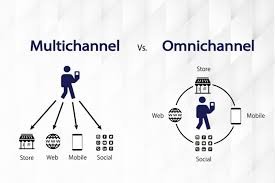
In 2026, the advertising landscape is undergoing a clear shift. Omnichannel advertising platforms are rapidly overtaking traditional ad tools, driven by their ability to deliver seamless, data-driven, and highly personalized customer journeys. As consumer behavior becomes increasingly fragmented across devices and environments, siloed advertising approaches are struggling to keep pace. What’s emerging instead is a unified, AI-powered model of advertising- one that prioritizes continuity, intelligence, and measurable impact across every touchpoint. Why Omnichannel Platforms Are Leading the Market Omnichannel advertising platforms have become central to modern marketing strategies because they unify customer interactions across channels such as mobile, web, social media, Connected TV (CTV), digital out-of-home (DOOH), and even in-store environments. Rather than treating each channel as a separate execution layer, these platforms operate from a single intelligence core- allowing brands to maintain consistency while optimizing performance in real time. AI-Powered Personalization at Scale In 2026, artificial intelligence is no longer a supporting feature- it is the operating system of omnichannel platforms. AI enables real-time personalization by analyzing behavioral signals, predicting intent, and dynamically adapting creative, timing, and messaging. This goes far beyond basic segmentation. Omnichannel platforms now deliver individualized ad experiences at scale, continuously refined through machine learning and autonomous optimization. First-Party Data as the Foundation With third-party cookies largely deprecated, omnichannel platforms are built around first-party data dominance. CRM systems, websites, apps, and owned customer touchpoints feed into a unified customer view- ensuring accurate targeting, privacy compliance, and reliable measurement. This first-party data foundation allows brands to activate insights responsibly while maintaining relevance in a privacy-restricted environment. Unified Commerce and Advanced Measurement One of the defining advantages of omnichannel platforms is their ability to integrate online and offline data. Closed-loop attribution models connect digital exposure to real-world outcomes- such as store visits or purchases following a shoppable CTV ad. AI-driven measurement frameworks now focus on metrics like predicted lifetime value, incrementality, and multi-touch attribution, offering clarity that traditional models struggle to provide. Expansion Into Immersive Channels Ad spend in 2026 is increasingly shifting toward immersive, high-engagement channels such as CTV, DOOH, and in-game advertising. Omnichannel platforms are uniquely positioned to manage and optimize these environments because they unify data, identity, and execution across formats. Traditional tools, by contrast, often lack the infrastructure needed to support these channels cohesively. The Role of Traditional Ad Tools in 2026 Traditional ad tools- such as static print media, linear television, and non-integrated digital tactics- are not obsolete. However, their role is changing. Their primary limitations include: As a result, traditional tools are experiencing a decline in both effectiveness and market share when compared to integrated omnichannel platforms. Omnichannel vs Traditional: A Strategic Comparison In 2026, the contrast between these approaches is clear. Omnichannel platforms offer seamless customer journeys, unified first-party data activation, AI-driven measurement, high operational efficiency, and real-time adaptability. Traditional tools, while still relevant in specific contexts, operate more slowly, rely on fragmented data, and struggle to prove ROI across complex customer journeys. This gap is widening as consumer expectations for relevance, continuity, and responsiveness continue to rise. The Competitive Imperative The trend in 2026 points decisively toward omnichannel advertising as a necessity rather than an advantage. Brands that embrace unified, AI-powered platforms are better positioned to adapt to changing behaviors, optimize spend efficiently, and deliver meaningful customer experiences at scale. With Cubera’s AI-led AdTech ecosystem, advertisers can move beyond fragmented execution- activating identity-driven insights, privacy-first data, and real-time optimization to power truly omnichannel growth in a rapidly evolving advertising landscape.

Data-Driven Marketing Platforms
Articles

Top Data-Driven Marketing Platforms to Watch in 2026

In 2026, data-driven marketing is no longer defined by dashboards alone. The most impactful platforms are those that combine integrated AI, real-time analytics, and personalization into unified systems capable of shaping the entire customer journey. As marketing teams prioritize speed, relevance, and accountability, platform leadership is increasingly determined by how intelligently data is activated- not just collected. Across rankings and adoption trends, the platforms gaining momentum are those embedding AI into core workflows, enabling predictive decision-making and cross-channel orchestration at scale. What Defines a Data-Driven Marketing Platform in 2026 Modern data-driven platforms operate as intelligence layers rather than reporting tools. They integrate customer data, behavioral signals, and AI models to guide decisions in real time- moving marketing from reactive analysis to proactive execution. Key capabilities shaping platform leadership include: These capabilities form the foundation of platforms driving growth in 2026. CRM and All-in-One Platforms CRM-centric platforms continue to anchor the data-driven marketing ecosystem by unifying customer data and execution. HubSpot and Salesforce remain category leaders, integrating AI-driven forecasting, predictive journeys, and lifecycle orchestration. Salesforce’s Einstein AI, in particular, enables deeper insights into customer intent and pipeline performance. Account-based marketing platforms such as ZoomInfo, 6sense, and Demandbase are also gaining traction. These tools use intent data and AI modeling to identify high-value accounts and orchestrate coordinated engagement across teams. Emerging players like Netcore Cloud are standing out for their agentic, AI-native approach- embedding intelligence directly into automation rather than layering it on top. Analytics and Customer Data Platforms (CDPs) Analytics platforms remain central to data-driven decision-making, but their role has evolved from reporting to interpretation. Google Analytics 4 and Adobe Analytics continue to serve enterprise needs with deep integrations across media and experience platforms. However, privacy constraints and increasing complexity have pushed teams to explore more flexible alternatives. Product analytics platforms like Mixpanel, Amplitude, and Heap excel in behavioral analysis, funnel optimization, and automatic event tracking- making them especially valuable for product-led growth strategies. Privacy-focused analytics tools such as Usermaven and Piwik PRO are also seeing increased adoption as brands seek compliance-ready insights without sacrificing usability. Specialized and Emerging Platforms Alongside core systems, specialized platforms are playing a critical role in hyper-targeted engagement. E-commerce-focused tools like Klaviyo, Drip, and Mailchimp leverage customer data to personalize email and SMS journeys with precision. In content and creative production, platforms such as Synthesia and Jasper are enabling faster, scalable content generation- supporting personalization without production bottlenecks. Meanwhile, Postscript has emerged as a leading SMS platform, helping brands deliver timely, high-intent messages through data-driven targeting. Key Trends Driving Platform Adoption in 2026 Several macro trends are shaping which data-driven marketing platforms gain relevance: AI-Driven Personalization AI is enabling one-to-one personalization in real time- crafting content, offers, and journeys dynamically based on live behavior rather than static segments. Predictive Analytics Platforms are shifting from descriptive reporting to predictive modeling, allowing marketers to anticipate outcomes and allocate resources proactively. Privacy-First Marketing With increasing regulation, platforms built around zero-party data, consent management, and cookieless measurement are outperforming legacy solutions. Agentic Marketing Systems A defining trend in 2026 is the rise of agentic platforms that can autonomously execute complex campaigns- adjusting budgets, sequencing messages, and optimizing channels with minimal human input. Cross-Channel Orchestration Winning platforms unify workflows across web, app, email, social, and paid media- ensuring consistent decision-making across touchpoints. What This Means for Marketers In 2026, the most valuable data-driven marketing platforms are not those that generate the most reports, but those that translate data into action. AI-native systems, privacy-first architectures, and real-time orchestration are now baseline expectations- not differentiators. With Cubera’s AI-led AdTech ecosystem, marketers can complement these platforms by activating identity-driven insights, predictive intelligence, and real-time optimization- ensuring data does not remain static, but actively drives growth across the funnel.

AI Marketing Platforms
Articles

HubSpot AI, Jasper, ChatGPT & More: The Ultimate 2026 AI Marketing Stack

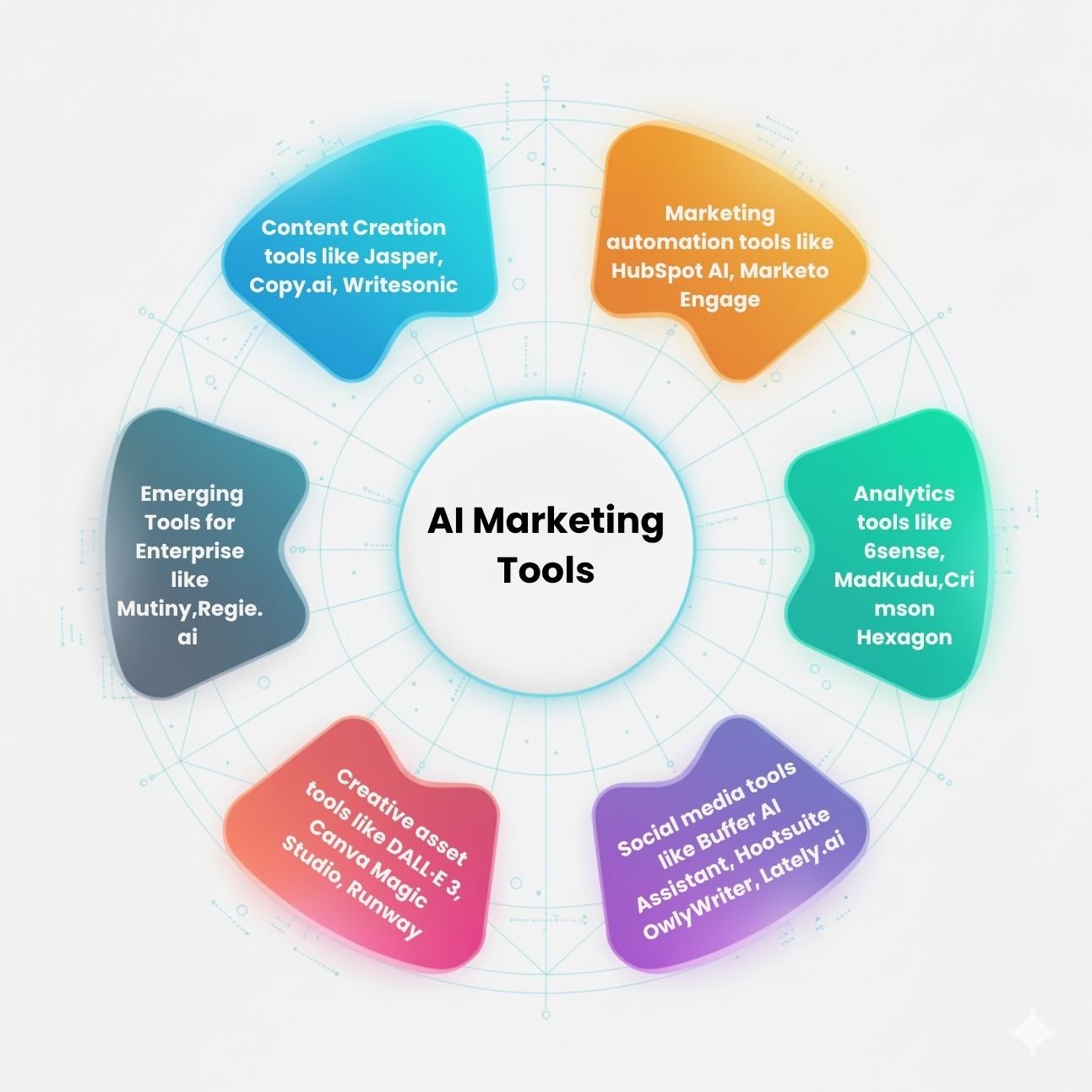
In 2026, marketing performance is no longer driven by individual tools- it is driven by how intelligently those tools work together. The most effective teams are building AI-native marketing stacks that combine automation, creativity, analytics, and execution into a single growth engine. At the center of this shift is a new generation of AI marketing platforms that embed intelligence directly into core workflows. From CRM and content creation to SEO, advertising, and workflow automation, the modern AI marketing stack is designed to scale personalization, accelerate decision-making, and maximize efficiency. What Defines an AI Marketing Stack in 2026? Unlike traditional martech stacks, the 2026 AI marketing stack is not tool-heavy- it is intelligence-led. Each platform plays a specific role, but AI acts as the connective layer across systems. The most effective stacks share four defining characteristics: Together, these elements enable marketers to move from execution support to autonomous growth systems. The Core of the 2026 AI Marketing Stack All-in-One CRM and Marketing Automation Platforms like HubSpot (AI-powered features) form the backbone of the stack. They unify customer data, automate lifecycle marketing, and use predictive lead scoring to prioritize high-intent prospects. AI-driven journey orchestration ensures that engagement adapts dynamically based on behavior rather than static rules. Content Creation and Ideation AI writing platforms such as Jasper and ChatGPT enable teams to produce blogs, ads, emails, and landing page copy at scale. These tools accelerate production while maintaining brand consistency, allowing marketers to test and iterate messaging faster than ever before. SEO and Content Optimization Search visibility in 2026 depends on data-driven optimization. Platforms like Surfer SEO and Semrush (AI features) analyze SERP patterns, keyword intent, and competitive gaps to guide content creation. As AI-powered search grows, these tools also support Generative Engine Optimization (GEO) strategies to increase visibility in AI-generated answers. Advertising and Campaign Automation AI-led advertising platforms such as Albert and Google Performance Max manage campaigns autonomously- handling budget allocation, bid optimization, and creative testing in real time. These systems allow marketers to scale paid media efficiently while reducing manual intervention. Visual and Video CreationCreative production has become significantly faster with platforms like Canva (AI), Synthesia, and Midjourney. In parallel, workflow tools such as Zapier and ActiveCampaign connect systems, automate repetitive tasks, and ensure seamless insight flow across platforms. Why This Stack Works The power of this AI marketing stack lies not in individual tools, but in how they reinforce each other. Content generated by AI feeds directly into SEO optimization. Performance data informs advertising decisions in real time. CRM insights guide personalization across channels. Automation ensures that nothing operates in isolation. This interconnected intelligence enables: Most importantly, it allows marketing teams to focus on strategy while AI handles execution complexity. Privacy, Identity, and Responsible Scale As privacy expectations continue to evolve, successful AI marketing stacks prioritize first- and zero-party data. Identity-driven frameworks ensure personalization and measurement remain accurate without relying on third-party cookies. Platforms that integrate identity intelligence and consent-driven data activation are better positioned to scale sustainably- maintaining both performance and trust. What This Means for Marketers in 2026 The ultimate AI marketing stack in 2026 is not about adopting every available tool. It is about selecting platforms that embed intelligence into execution, integrate seamlessly, and adapt in real time. Marketers who build stacks around AI-native platforms gain a decisive advantage- moving faster, operating leaner, and delivering measurable growth in an increasingly competitive landscape. The Stack That Scales Growth AI marketing platforms like HubSpot AI, Jasper, ChatGPT, and their ecosystem peers are redefining how marketing is executed. When combined into a cohesive stack, they enable brands to move beyond automation and into autonomous, intelligence-led growth. With Cubera’s AI-led AdTech ecosystem, advertisers can further extend this stack- activating identity-driven insights, real-time optimization, and privacy-first performance to ensure every marketing decision is informed, adaptive, and scalable.

AI Marketing
Articles

AI Marketing Platforms That Drive Growth: Rankings and Traffic Trends (2026)

In 2026, the AI marketing landscape is defined by platforms that embed artificial intelligence directly into their core functions- content creation, SEO, campaign automation, and performance optimization. Rather than acting as add-ons, AI systems now serve as the central engine of marketing operations, enabling hyper-personalization, real-time decision-making, and scalable growth. As a result, rankings and traffic trends increasingly favor AI-native marketing platforms that deliver measurable efficiency and sustained performance across channels. The Evolution of AI Marketing Platforms AI marketing platforms have moved beyond basic automation. The most influential tools in 2026 operate as intelligent systems capable of learning, adapting, and executing autonomously. These platforms integrate predictive analytics, audience intelligence, and real-time optimization to reduce manual intervention while improving outcomes. A key differentiator in today’s rankings is the shift toward agentic AI– systems that can independently manage and optimize entire campaigns rather than simply supporting human workflows. Top AI Marketing Platform Categories in 2026 Rather than a single dominant solution, the AI marketing ecosystem is organized around specialized use cases. Leading platforms consistently fall into the following categories: All-in-One / CRM PlatformsPlatforms such as HubSpot (AI features) and Salesforce (Einstein) lead this category by integrating marketing automation, predictive lead scoring, and customer journey orchestration. Their strength lies in unifying data, execution, and analytics within a single AI-driven framework. Content Creation PlatformsTools like Jasper, Copy.ai, and ChatGPT enable brands to generate high-quality, brand-consistent content at scale- across blogs, ads, and email campaigns- while significantly reducing production time. SEO and Content Optimization PlatformsPlatforms including Surfer SEO, Semrush (AI features), and MarketMuse focus on data-driven content optimization. By analyzing SERPs, keyword intent, and competitive gaps, they support sustainable organic growth in both traditional and AI-driven search environments. Advertising and Campaign Automation PlatformsAI-led advertising platforms such as Albert, AdCreative.ai, and Google Performance Max excel at autonomous ad management. Their primary strength lies in real-time budget optimization, creative generation, and bid decisioning- driving higher ROI with reduced manual oversight. Visual and Video Creation PlatformsTools like Canva (AI), Synthesia, Runway, and Midjourney allow marketers to produce professional-grade visuals and AI-generated videos without traditional production costs- dramatically accelerating creative workflows. Automation and Workflow PlatformsPlatforms such as Zapier, Gumloop, and ActiveCampaign focus on connecting tools and automating workflows through intelligent triggers- helping teams scale operations efficiently across fragmented stacks. Key Traffic and Market Trends Shaping 2026 Traffic and adoption data in 2026 reveal several clear trends shaping the AI marketing ecosystem. AI-Native Platforms Are Leading GrowthThe market has fully shifted from AI as an enhancement to AI as the foundation. Platforms built natively around artificial intelligence- such as Genspark and Synthesia- are seeing strong traffic growth, increased engagement, and heightened investor interest. Hyper-Personalization Is the StandardAI now enables one-to-one personalization at scale. Instead of static segmentation, platforms deliver individualized content, timing, and offers based on real-time behavior. Organizations excelling at hyper-personalization report revenue gains of up to 40% compared to industry averages. Agentic AI Adoption Is AcceleratingA defining trend of 2026 is the adoption of agentic AI systems capable of executing complex tasks autonomously. These systems can adjust ad budgets, generate content variations, and optimize campaigns continuously- without constant human input- significantly improving speed and efficiency. Optimizing for AI Search Engines The rise of AI Overviews in Google and AI-powered search engines like Perplexity has shifted SEO strategies toward Generative Engine Optimization (GEO). Marketers now optimize content not only for rankings, but for visibility within AI-generated answers- reshaping how SEO platforms measure success. Measurable ROI and Efficiency Gains AI-driven platforms are delivering tangible results: These performance gains are directly influencing platform rankings and sustained traffic growth. Voice and Conversational AI Are Becoming Frontline ChannelsConversational AI chatbots and voice assistants are increasingly handling customer interactions in real time. By managing FAQs, product recommendations, and lead qualification, these systems reduce cart abandonment and improve engagement- positioning conversational AI as a core growth lever. The Bigger Picture In 2026, AI marketing platforms that drive growth are those that combine autonomy, intelligence, and trust. Rankings and traffic trends consistently reward platforms that move beyond analytics and into execution– where AI actively shapes outcomes, not just insights. With Cubera’s AI-led AdTech ecosystem, advertisers can align with this shift- leveraging identity-driven intelligence, privacy-first activation, and real-time optimization to scale growth confidently in a rapidly evolving marketing landscape.

Real Time Bidding
Articles

Why Millisecond Latency Is the New Battleground in Real-Time Bidding

In modern programmatic advertising, winning an auction is no longer just about bid value or audience relevance. It is increasingly about speed. In real-time bidding (RTB), where decisions are made in fractions of a second, millisecond latency has become a decisive competitive factor – one that directly impacts win rates, performance, and revenue. As advertising systems grow more intelligent and data-rich, the ability to act faster than competitors is redefining success in programmatic auctions. Understanding Latency in Real-Time Bidding Latency refers to the time it takes for a system to process a bid request, evaluate signals, make a decision, and respond during an auction. In RTB environments, this entire process typically occurs within 100 milliseconds or less. Even minor delays – measured in single-digit milliseconds – can determine whether a bid is accepted, ignored, or timed out. In highly competitive auctions, slower systems simply lose the opportunity to participate, regardless of bid quality. Why Speed Now Determines Auction Outcomes Programmatic ecosystems operate at a massive scale, with millions of auctions occurring every second. As more advertisers rely on AI-driven bidding strategies, competition has intensified – not just on price, but on responsiveness. Faster systems are able to: In contrast, higher latency limits participation, reduces win rates, and increases inefficiencies – making speed a direct driver of performance. The Role of AI in Low-Latency Decision-Making AI-powered bidding engines must balance intelligence with execution speed. While advanced models improve prediction accuracy, they also introduce computational complexity. The challenge lies in designing systems that can generate high-quality decisions without sacrificing responsiveness. Optimized AI architectures, efficient data pipelines, and real-time inference models allow platforms to process signals rapidly while maintaining predictive strength. When AI decisions are delivered within strict latency thresholds, advertisers gain both precision and speed – an increasingly rare combination. Infrastructure as a Competitive Advantage Latency is not only a software issue – it is deeply tied to infrastructure. Proximity to exchanges, optimized cloud architectures, and efficient data routing all play critical roles in reducing response times. Modern AdTech platforms invest heavily in infrastructure design to minimize delays across the bidding lifecycle. This includes reducing network hops, optimizing storage access, and ensuring scalable systems that perform consistently under peak demand. In this environment, infrastructure is no longer a backend concern – it is a strategic differentiator. Identity and Latency in Privacy-First Auctions As identity resolution shifts toward first- and zero-party data, additional processing layers are introduced into RTB workflows. Resolving identity, validating consent, and activating cohorts must all occur without increasing response times. Well-designed identity graphs enable rapid lookups and decision-making without relying on slow or fragmented data sources. This ensures that privacy-first bidding does not come at the cost of speed – a critical requirement in modern auctions. Why Milliseconds Matter More Than Ever In today’s programmatic landscape, advertisers are not competing in seconds or even tenths of a second. They are competing in milliseconds. Faster response times translate directly into: As AI, identity, and scale converge, latency has become the invisible battleground shaping advertising outcomes. The Performance Edge Millisecond latency is no longer a technical detail – it is a performance lever. Advertisers that operate on faster, smarter systems gain access to better opportunities, more consistent results, and greater efficiency at scale. With Cubera’s AI-led AdTech ecosystem, low-latency infrastructure, identity-driven intelligence, and real-time optimization work in unison – ensuring advertisers compete and win where it matters most: in the milliseconds that decide every auction.

Real Time Bidding
Articles

Real-Time Bidding Explained: How Modern Programmatic Auctions Work Today

Behind every digital ad impression is a rapid decision-making process that happens in milliseconds. This process, known as Real-Time Bidding (RTB), forms the backbone of modern programmatic advertising. While the concept has existed for years, RTB today looks very different from its early iterations- driven by AI, identity intelligence, and privacy-first data strategies. Understanding how modern programmatic auctions work is essential for advertisers seeking efficiency, transparency, and scale in an increasingly complex media ecosystem. What Is Real-Time Bidding? Real-Time Bidding is an automated auction-based process through which digital ad impressions are bought and sold in real time. When a user visits a website or app, an auction is triggered, allowing advertisers to bid for that impression based on audience relevance, campaign objectives, and contextual signals. All of this occurs in fractions of a second, ensuring that the most relevant ad is served to the user without disrupting the browsing experience. How Modern Programmatic Auctions Operate When a user loads a page, available ad inventory is sent to an ad exchange along with anonymized data signals such as device type, location, content context, and audience attributes. Demand-side platforms (DSPs) evaluate this information against advertiser criteria and submit bids accordingly. The auction is then executed, and the highest-value bid – based on price and relevance – wins the impression. The entire process typically completes within 100 milliseconds. What differentiates modern RTB from earlier models is the intelligence applied at each stage. The Role of AI in Real-Time Bidding AI has transformed RTB from a simple price-based auction into a sophisticated decision engine. Machine learning models analyze historical performance, behavioral patterns, and real-time signals to predict the likelihood of engagement or conversion. These predictions inform bid values, budget allocation, and frequency decisions dynamically. Instead of static rules, AI enables continuous optimization – ensuring bids reflect current conditions rather than outdated assumptions. This intelligence allows advertisers to compete efficiently at scale while minimizing wasted spend. Identity and Relevance in a Privacy-First Environment As third-party cookies decline, identity resolution has become central to effective RTB. Modern programmatic auctions increasingly rely on first- and zero-party data, unified through identity graphs, to determine relevance without invasive tracking. By resolving users across devices and channels within consented frameworks, identity-driven RTB maintains accuracy while respecting privacy regulations. This ensures that bidding decisions are based on meaningful signals rather than fragmented or unreliable identifiers. Transparency and Control in Today’s Auctions One of the historical criticisms of programmatic advertising has been opacity. Modern RTB frameworks address this by offering greater visibility into bidding logic, inventory quality, and performance metrics. Advertisers now have more control over where ads appear, how budgets are allocated, and which signals influence bidding decisions. This transparency builds confidence and supports long-term brand safety and performance goals. Why RTB Still Matters Despite evolving technologies and regulatory changes, RTB remains foundational to digital advertising. Its ability to balance scale, relevance, and efficiency makes it indispensable in omni-channel strategies. When powered by AI and identity intelligence, RTB enables advertisers to reach the right audiences at the right moment – without manual intervention or excessive data dependency. Where This Leaves Advertisers Real-Time Bidding has evolved into a highly intelligent, privacy-aware system that supports modern advertising at scale. Success in today’s programmatic auctions depends not just on bidding faster, but on bidding smarter – using high-quality data, AI-driven insights, and transparent execution frameworks. With Cubera’s AI-led AdTech ecosystem, advertisers can navigate real-time auctions with confidence – leveraging identity-driven intelligence, advanced optimization, and full-funnel visibility to deliver consistent, measurable outcomes.

Articles

What Is an Identity Graph – And Does It Still Work Without Cookies?

As the digital advertising ecosystem moves away from third-party cookies, one concept has gained renewed attention: the identity graph. Once closely associated with cross-site tracking and third-party identifiers, identity graphs are now being redefined to support privacy-first, consent-driven marketing. This has led many advertisers to ask a critical question – does an identity graph still work without cookies? The short answer is yes. But how it works, and why it matters, has fundamentally changed. Understanding the Identity Graph An identity graph is a structured framework that connects multiple user identifiers – such as devices, channels, and interactions – into a unified view of an individual or household. Its purpose is to help advertisers understand how users engage across touchpoints, enabling consistent targeting, measurement, and personalization. Traditionally, identity graphs relied heavily on third-party cookies and probabilistic signals to stitch together these interactions. While effective at scale, this approach often lacked transparency and struggled under growing privacy regulations. Why Cookies Are No Longer the Foundation The gradual deprecation of third-party cookies, combined with stricter privacy laws, has forced advertisers to rethink identity resolution. Cookie-based graphs face limitations not only in compliance, but also in accuracy, persistence, and cross-device reliability. More importantly, consumer expectations have shifted. Users now expect brands to rely on data they have explicitly shared or consented to – making cookie-dependent identity models increasingly unsustainable. How Identity Graphs Work Without Cookies Modern identity graphs are built on first- and zero-party data rather than third-party tracking. These graphs use deterministic signals – such as authenticated interactions, declared preferences, and consented identifiers – to create accurate and privacy-compliant user profiles. AI and machine learning play a crucial role in this evolution. By analyzing patterns within high-quality, consented data, AI-driven identity graphs can resolve identities across channels while respecting regulatory boundaries. This allows advertisers to maintain continuity without relying on invasive tracking methods. The Role of Privacy and Consent Privacy is no longer an add-on to identity resolution – it is central to it. Cookie-less identity graphs are designed with transparency, encryption, and governance at their core. Users retain control over how their data is used, while brands benefit from cleaner, more reliable signals. This consent-driven approach strengthens trust and improves data quality, resulting in identity frameworks that are not only compliant, but more effective in the long term. Why Identity Graphs Still Matter Even without cookies, the need for unified identity has not disappeared. Advertisers still require a way to understand user journeys, measure performance across channels, and deliver consistent experiences. Identity graphs provide this continuity by connecting data within trusted environments. When integrated with AI-powered activation platforms, they enable precise targeting, smarter cohort creation, and accurate attribution – without compromising privacy. Identity as an Enabler of Scalable Advertising In a fragmented media landscape, scalability depends on clarity. Identity graphs offer a structured way to unify signals, reduce duplication, and improve decision-making across campaigns. When powered by first- and zero-party data, they become resilient to regulatory change and platform disruption. This makes identity graphs a foundational component of future-ready advertising ecosystems. Final Thoughts Identity graphs are not becoming obsolete – they are evolving. Freed from their reliance on cookies, modern identity frameworks are more transparent, accurate, and privacy-aligned than ever before. With Cubera’s AI-driven identity graph and privacy-first data approach, advertisers can continue to deliver personalized, measurable, and scalable campaigns – proving that identity resolution doesn’t need cookies to work, only trust, intelligence, and the right technology.

Data Security
Articles

From Compliance to Competitive Advantage: Why Privacy Is Now a Growth Strategy

For years, privacy in digital advertising was treated as a regulatory obligation – something to manage carefully in order to avoid penalties and reputational risk. Today, that perception is changing. As consumers demand greater transparency and regulators tighten oversight, privacy has emerged not as a limitation, but as a strategic advantage for brands willing to adapt. In this new environment, privacy is no longer separate from growth. It is increasingly central to it. The Shift From Obligation to Opportunity Regulations such as GDPR and evolving global privacy frameworks have forced advertisers to reconsider how data is collected and used. While early responses focused on compliance checklists, leading brands have begun to recognize a deeper opportunity: privacy-first practices can strengthen customer relationships and improve marketing effectiveness. By prioritizing consent and transparency, brands gain access to more reliable, high-intent data. Users who willingly share information are more engaged, more trusting, and more likely to convert – making privacy-aligned data inherently more valuable. Better Data, Not More Data The era of unrestricted data collection is coming to an end. Growth strategies now depend less on volume and more on quality. First- and zero-party data, gathered through direct interactions, offers clearer insights into consumer intent than anonymous third-party signals ever could. When activated through AI-driven platforms, this data enables precise audience modeling, smarter segmentation, and more relevant messaging. The result is improved performance with fewer data points – demonstrating that responsible data use can outperform aggressive collection strategies. Trust as a Differentiator In crowded digital markets, trust has become a meaningful point of differentiation. Consumers are increasingly aware of how brands handle data and are more inclined to engage with those that demonstrate accountability. Privacy-first brands signal respect for user autonomy. This trust translates into higher opt-in rates, longer customer lifecycles, and stronger brand affinity – outcomes that directly support sustainable growth. Privacy-Driven Innovation in Advertising Contrary to common assumptions, privacy constraints have not slowed innovation. Instead, they have accelerated the adoption of smarter technologies. Identity resolution frameworks, AI-powered cohort modeling, and contextual intelligence enable advertisers to deliver relevance without intrusive tracking. These innovations allow campaigns to scale responsibly across channels while maintaining compliance and performance. Privacy, in this sense, becomes a catalyst for better system design rather than a barrier to execution. Aligning Compliance With Business Outcomes When privacy is embedded into strategy rather than treated as an afterthought, compliance and performance move in parallel. Clear data governance, transparent usage policies, and privacy-by-design architectures reduce operational risk while improving efficiency. Advertisers that align compliance with growth objectives are better positioned to adapt to regulatory change without disruption – creating resilience alongside performance. The Strategic Advantage Privacy has evolved from a regulatory requirement into a competitive advantage. Brands that embrace this shift are building stronger data foundations, deeper customer trust, and more future-ready marketing strategies. With Cubera’s AI-led, identity-driven AdTech ecosystem, advertisers can transform privacy into a growth enabler – activating high-quality first- and zero-party data while maintaining transparency, control, and scalability.

Privacy-First Marketing
Articles

Privacy-First Marketing: How to Grow Without Violating Consumer Trust

Consumer expectations around data usage have shifted dramatically. Today’s users are more aware of how their data is collected, shared, and monetized – and they expect brands to act responsibly. At the same time, businesses are under pressure to grow, personalize experiences, and demonstrate measurable returns. Privacy-first marketing has emerged as the solution to this tension, enabling brands to scale without compromising consumer trust. Rather than being a constraint, privacy is increasingly shaping smarter, more sustainable marketing strategies. The Trust Economy Is Reshaping Marketing Trust has become a defining currency in digital engagement. With heightened regulatory scrutiny and growing consumer awareness, opaque data practices are no longer viable. Users now prefer brands that are transparent about data usage and respectful of consent. Privacy-first marketing recognizes this shift by placing the consumer at the center of data strategy. It prioritizes clarity, consent, and control – ensuring that data collection is both ethical and purposeful. Brands that embrace this approach build stronger relationships, leading to higher engagement and long-term loyalty. Growth Without Over-Reliance on Third-Party Data The decline of third-party cookies has forced advertisers to rethink how they acquire and activate audiences. Privacy-first strategies focus instead on first- and zero-party data – information that users willingly share through direct interactions. This data is not only more compliant but also more accurate. When enriched and activated through AI-driven systems, it enables precise targeting and personalization without invasive tracking. The result is growth that is resilient to regulatory change and aligned with evolving consumer expectations. Personalization That Respects Boundaries Effective personalization does not require excessive data collection. Privacy-first marketing leverages contextual signals, declared preferences, and identity-based insights to deliver relevance without overstepping boundaries. AI plays a critical role here, helping brands interpret limited but high-quality data to create meaningful experiences. By focusing on intent rather than surveillance, advertisers can maintain personalization while preserving user trust. Transparency as a Performance Driver Transparency is often viewed as a compliance requirement, but it also drives performance. When users understand how and why their data is used, they are more likely to engage, share preferences, and remain loyal to a brand. Clear data practices reduce friction across the customer journey, improve opt-in rates, and enhance the overall effectiveness of campaigns. In this way, privacy-first marketing directly contributes to stronger outcomes rather than limiting them. Technology Enabling Responsible Scale Scaling privacy-first marketing requires the right technology foundation. Identity resolution, AI-driven cohort modeling, and secure data architectures allow brands to activate insights across channels while maintaining compliance. These systems ensure that data is unified, anonymized where necessary, and governed by clear usage policies – making responsible scale both achievable and efficient. What This Means for Brands Privacy-first marketing is no longer optional. It is a strategic imperative that enables sustainable growth in a trust-driven digital economy. Brands that treat privacy as a core value – not a checkbox – are better positioned to adapt, innovate, and build lasting customer relationships. With Cubera’s AI-led, identity-driven AdTech ecosystem, advertisers can grow responsibly – activating rich first – and zero-party data while maintaining transparency, compliance, and consumer trust.

Scroll to Top