Author name: khazi@cubera.co

Artificial Intelligence
Articles

Why AI-Powered Advertising Is Scaling Faster Than Ever

The pace at which advertising technology is evolving has accelerated dramatically in recent years. What once relied on manual optimization, historical assumptions, and fragmented insights is now driven by intelligent systems capable of learning and adapting in real time. At the center of this transformation is AI-powered advertising – scaling faster than ever and reshaping how brands reach, engage, and convert audiences. This rapid growth is not incidental. It is the result of structural shifts in data availability, media complexity, and the demand for efficiency at scale. The Explosion of Data and Complexity Modern advertising operates in a landscape defined by massive data volumes and fragmented user journeys. Consumers move seamlessly across devices, platforms, and channels, leaving behind signals that are both valuable and difficult to interpret manually. AI thrives in this environment. Machine learning models can ingest and analyze vast datasets across touchpoints, identifying patterns and correlations that would otherwise remain invisible. As data ecosystems expand, AI becomes not just helpful, but essential for maintaining relevance and precision at scale. Automation That Goes Beyond Efficiency Early automation in advertising focused primarily on reducing manual effort – automating bids, placements, or reporting. Today’s AI-powered systems go far beyond efficiency. Advanced models continuously learn from performance outcomes, dynamically adjusting strategies based on real-time feedback. Budget allocation, audience segmentation, creative optimization, and frequency control are no longer static decisions. They evolve continuously, allowing campaigns to scale without sacrificing performance or control. This ability to optimize holistically across channels is a key reason AI-powered advertising is growing so rapidly. Identity-Driven Targeting at Scale As privacy regulations tighten and third-party cookies phase out, advertisers are rethinking how audiences are identified and activated. AI-powered advertising, when combined with strong identity frameworks, enables scalable targeting rooted in first – and zero-party data. Identity graphs unify user signals across devices and platforms, giving AI models a consistent, privacy-compliant view of the customer. This allows advertisers to scale campaigns while maintaining accuracy, relevance, and compliance – an increasingly critical balance in today’s ecosystem. Faster Decisions, Smarter Outcomes Speed is another major factor driving AI adoption. Advertising environments change by the minute, influenced by market dynamics, consumer behavior, and competitive activity. AI systems can react instantly, making thousands of micro-decisions in the time it would take a human team to analyze a single report. This real-time responsiveness allows brands to capture opportunities as they arise, correct inefficiencies early, and scale winning strategies without delay. The Role of Human Strategy in AI-Driven Scale While AI accelerates execution, strategic direction remains human-led. Defining objectives, setting guardrails, and aligning campaigns with long-term brand goals are responsibilities that cannot be automated away. The fastest-scaling advertising organizations are those that pair human insight with machine intelligence – allowing AI to handle complexity while teams focus on vision, governance, and growth strategy. The Bigger Picture AI-powered advertising is scaling faster than ever because it aligns perfectly with the realities of modern marketing: more data, more channels, higher expectations, and less room for inefficiency. By combining automation, intelligence, and identity-driven insights, AI enables advertisers to grow without losing precision or control. With Cubera’s AI-led AdTech ecosystem, brands can scale confidently – leveraging real-time intelligence, privacy-first data strategies, and omnichannel execution to stay ahead in an increasingly competitive landscape.

AI Replacing Humans
Articles

Is AI Replacing Human Media Buyers? The Truth About Ad Automation

As artificial intelligence becomes increasingly embedded in advertising platforms, a pressing question continues to surface across the industry: is AI replacing human media buyers? Ad automation is at the center of this ongoing industry discussion. With algorithms now managing bids, optimizing creatives, and reallocating budgets in real time, the role of human intervention appears to be shrinking. Yet the reality is more nuanced than a simple replacement narrative. AI is not eliminating the need for media buyers. Instead, it is redefining how value is created within the advertising ecosystem. Why This Question Is Being Asked Now The rise of ad automation has been both rapid and visible. Programmatic buying, AI-driven optimization, and autonomous campaign management tools have significantly reduced manual workloads. Tasks that once required constant monitoring – such as bid adjustments, audience targeting, and performance tracking – are now handled by machines with far greater speed and scale. At the same time, increasing media fragmentation and growing data complexity have made traditional, manual approaches less effective. AI has stepped in to manage this complexity, leading many to assume that human roles are becoming redundant. However, automation’s growth reflects a shift in responsibility, not a removal of human expertise. What Ad Automation Actually Does Well AI excels in areas that demand speed, pattern recognition, and continuous optimization. It can analyze massive volumes of data across channels, identify correlations that are difficult for humans to detect, and respond instantly to performance signals. Automated systems are particularly effective at real-time bid optimization, dynamic budget allocation, audience segmentation, cross-platform scaling, and continuous performance learning. These capabilities allow campaigns to run more efficiently, reducing waste and improving ROI. In this context, AI enhances execution rather than replaces strategic thinking. Where Human Media Buyers Remain Essential Despite its strengths, AI operates within the boundaries of defined objectives, data quality, and governance frameworks. It does not inherently understand brand values, long-term business goals, or nuanced market dynamics. This is where human media buyers continue to play a critical role. Human expertise is essential for defining campaign objectives, interpreting insights in a broader business context, ensuring ethical and privacy-compliant data usage, making judgment calls in ambiguous situations, and aligning media strategy with brand positioning. Rather than managing every adjustment manually, media buyers now oversee systems, validate outcomes, and guide campaigns strategically. The Evolving Role of the Media Buyer The role of the media buyer is shifting from execution-focused to strategy-led. As automation absorbs operational complexity, professionals are increasingly responsible for designing frameworks that guide AI systems toward meaningful outcomes. This evolution demands new skill sets, including data literacy, analytical reasoning, and a strong understanding of AI-driven platforms. Media buyers are becoming strategic architects – shaping how technology is deployed rather than competing with it. Automation and Accountability One of the primary concerns surrounding AI-driven advertising is accountability. Automated systems may optimize aggressively for short-term metrics if left unchecked, potentially overlooking long-term brand equity or audience trust. Human oversight ensures that optimization remains aligned with sustainable growth, transparency, and regulatory compliance. In this balance, AI and humans function most effectively as collaborators rather than competitors. To Sum It Up AI is not replacing human media buyers – it is refining the role. Automation removes repetitive tasks, accelerates execution, and improves efficiency, allowing professionals to focus on strategy, judgment, and long-term impact. The most effective advertising ecosystems will be those that combine machine intelligence with human governance. With Cubera’s AI-led AdTech ecosystem, advertisers can scale confidently – leveraging automation while retaining clarity, control, and accountability.

Autonomous AI Agents Are Running Ad Campaigns End-to-End
Articles

How Autonomous AI Agents Are Running Ad Campaigns End-to-End

The advertising ecosystem is undergoing a fundamental shift. As consumer journeys become increasingly complex and data volumes continue to grow, traditional campaign management methods like manual optimization, rule-based automation, and fragmented decision-making – are reaching their limits. In response, advertisers are turning to autonomous AI agents that can manage campaigns end-to-end with speed, precision, and scale. The advertising ecosystem is undergoing a fundamental shift. As consumer journeys become increasingly complex and data volumes continue to grow, traditional campaign management methods like manual optimization, rule-based automation, and fragmented decision-making – are reaching their limits. In response, advertisers are turning to autonomous AI agents that can manage campaigns end-to-end with speed, precision, and scale. From Assisted Automation to Autonomous Intelligence Early forms of AI in advertising focused primarily on assistance. Algorithms helped optimize bids, recommend creatives, or identify high-performing segments, but decision-making largely remained human-led. Autonomous AI agents represent the next stage of evolution. These systems are capable of understanding campaign objectives, evaluating real-time signals, and adjusting strategies dynamically without requiring constant manual input. By continuously learning from outcomes and feedback loops, they evolve alongside changing user behavior, market conditions, and platform dynamics. At the core of this shift is the ability to move from isolated optimizations to holistic campaign intelligence. How Autonomous AI Agents Manage the Campaign Lifecycle Autonomous AI agents operate across every stage of a campaign, creating a unified and adaptive advertising process. Planning and Strategy FormationCampaigns begin with clear objectives – reach, engagement, conversions, or ROI. Autonomous agents translate these goals into actionable strategies by analyzing historical performance, audience insights, and market trends. This allows for intelligent budget allocation, channel selection, and timeline planning, grounded in data rather than assumptions. Audience Discovery and TargetingUsing first- and zero-party data enriched through identity graphs, AI agents build accurate audience profiles and identify high-value segments. Lookalike modeling and cohort generation are continuously refined as new behavioral signals emerge, ensuring targeting remains relevant across channels and devices. Creative and Channel OptimizationOnce campaigns go live, autonomous agents monitor performance across formats and platforms in real time. They dynamically adjust creative combinations, placements, and frequency to maintain consistency while maximizing engagement. This ensures messaging remains aligned throughout the omni-channel journey. Real-Time Optimization and LearningOne of the most powerful advantages of autonomous AI agents is their ability to learn continuously. Performance data feeds back into the system, enabling rapid experimentation, adaptive bidding, and budget reallocation. Underperforming strategies are corrected instantly, while successful patterns are scaled without delay. Measurement and Outcome PredictionBeyond reporting, autonomous agents predict future performance using advanced modeling techniques. This enables proactive decision-making, helping advertisers anticipate shifts in demand, audience behavior, or campaign fatigue before they impact results. The Role of Data and Identity in Autonomy Autonomous decision-making is only as strong as the data that supports it. High-quality first- and zero-party data provide the foundation for accurate modeling, while identity resolution ensures consistency across touchpoints. By unifying user interactions into a single, privacy-compliant view, AI agents gain a deeper understanding of intent and behavior. This identity-driven approach not only improves targeting accuracy but also enables responsible data usage in an increasingly privacy-conscious environment. Where Human Oversight Still Matters Despite their autonomy, AI agents are not designed to replace human expertise. Strategic oversight remains essential – particularly when defining objectives, evaluating long-term brand impact, and ensuring alignment with business goals. Human intervention provides contextual judgment and ethical governance, while AI handles execution at scale. The most effective advertising ecosystems combine human strategy with machine intelligence, allowing each to operate where it performs best. Looking Ahead The future of advertising lies in intelligent ecosystems that adapt in real time. Autonomous AI agents, powered by strong identity frameworks and privacy-first data strategies, are setting the standard for how campaigns are planned, executed, and optimized. With Cubera’s AI-driven AdTech ecosystem, brands can move beyond fragmented automation and toward truly autonomous advertising – where data, intelligence, and performance work in perfect synchronization.

Press Release

Cubera Cube Launches in India: Ushering a New Era of Audience Discovery and Creative Campaigning

AI-Driven Campaign Intelligence, Built for India Bengaluru, India, September 16th, 2025 — Cubera Tech India Pvt. Ltd., a global innovator in ad-tech intelligence, today announced the India introduction of its groundbreaking product — Cubera Cube — a real-time audience discovery and campaign ideation platform powered by conversational AI (artificial intelligence). Designed for speed, creativity, and collaboration, Cube is now available to Indian marketers, brands, and agencies eager to create more agile, data-driven campaigns with zero setup time and at the lowest cost in the market. Built on a proprietary Retrieval-Augmented Generation (RAG) Large Language Model — engineered specifically for AdTech and built to last — along with a powerful suite of Generative AI models and realtime data feeds, Cube brings cultural intelligence, location signals, retail trends, and sentiment analysis into one streamlined workspace. Users can upload any campaign brief and chat their way to strategy, audience segments, creative directions, and actionable insights. During its pre-launch beta phase in India, Cube delivered transformative outcomes for early adopters. Marketers reported campaign optimizations 40% faster than traditional workflows, along with a 35% reduction in brand-safety incidents, thanks to Cube’s sentiment-aware planning capabilities. Brands that leveraged retail signal triggers saw a 14% lift in in-store visits within just 48 hours of activation. Additionally, campaigns aligned with cultural sentiment and realtime audience insights recorded notable improvements in ROAS, underscoring Cube’s ability to translate intelligence into tangible performance gains. “In today’s always-on, hyper-fragmented marketing environment, brands need more than just data — they need intelligence that’s fast, contextual, and deeply actionable,” said Dr. Samartha Nagabhushanam, CoFounder of Cubera. “We built Cube to act like a tireless team of planners, analysts, and creatives — available on tap — so that any brand, from emerging challenger to enterprise agency, adapt quickly to shifting local trends and consumer behavior. Marketers shouldn’t have to choose between speed and insight, or between performance and creativity,” he added. “Cube brings these together in a seamless conversational interface, letting you discover who to target and what to say — faster than ever before.” Vamsikrishna Sankarayogi, CTO Cubera added, “Every audience segment, every creative suggestion, and every signal-based insight is explainable, auditable, and grounded in data. This is AI that marketers can trust — not just because it performs, but because it shows its work. In an era where guesswork is costly, Cube replaces intuition with intelligence, and opacity with observability.” Marketers, agencies, and brand teams across India can now experience the power of Cube firsthand. Getting started is simple — users can upload a campaign brief in any format, and begin collaborating with Cube’s AI agents instantly. No setup, no training, and no payment required. With flexible plans and a free tier available from day one, Cube is built to support everyone — from independent creatives to large marketing teams. About Cubera Cubera is a performance-first AdTech company headquartered in San Diego, USA and Bengaluru, India. The company builds intelligent infrastructure for modern marketers—offering a full-stack ecosystem that spans programmatic media buying, attribution, and marketing automation. Designed for transparency, scalability, and measurable outcomes, Cubera helps agencies and brands unlock true performance in the digital economy. Learn more at www.cubera.co. Reach out to sales@cubera.co Anya Geraldine D’Souza,Cubera anya.gd@cubera.co www.cubera.co

Press Release

Cubera Unveils Edge & Hedwig inIndia, Ushering in a New Era of Data-Driven Advertising

The future-ready programmatic stack combines intelligent media buying, real-time fraud protection, and deep Mobile Measurement Partner (MMP) integrations — enabling predictable, measurable ROI for brands and agencies across India’s dynamic digital ecosystem. India – August, 28th, 2025: Cubera, a global AdTech innovator, headquartered in San Diego, USA and Bangalore, India, today announced the launch of its two flagship products in India: Cubera Edge, a full-stack Demand Side Platform (DSP), and Cubera Hedwig, a real-time attribution and postback engine — tailored for India’s multilingual, mobile-first, and privacy-focused market. Together, they deliver a future-ready, closed loop programmatic stack purpose-built for India’s rapidly expanding digital economy, while redefining performance-driven, privacy-first advertising for agencies, brands, and app marketers. With global programmatic ad spend exceeding $200B and India still vastly underpenetrated, Cubera sees a timely opportunity to return transparency, control, and measurable performance to advertisers. As privacy-first policies and regulatory shifts reshape the DSP landscape, Cubera’s approach offers advertisers the agility they need to scale in India. “Our mission is to give Indian marketers the kind of transparent, high-performance AdTech stack they’ve long been promised but rarely delivered,” said Dr. Samartha Nagabhushanam, Co-CEO & Co-Founder, Cubera. “Edge and Hedwig represent not just two new products, but an entirely new way to think about accountability in programmatic advertising. We’ve built a system that knows when to bid, when to pause, and when to optimize — not just to participate in auctions, but to win with purpose.” Cubera Edge is an omnichannel demand-side platform (DSP) architected for precision, scale, and efficiency, seamlessly activating campaigns across web, mobile, and connected TV (CTV). The platform Protects every impression with a real-time fraud scoring pipeline Supports seamless media buying with OpenRTB 2.5 and Prebid.js compatibility Executes at scale through a high-throughput microservices backend Provides Plug-and-play GTM support for agencies, OEMs, app developers, and direct brands Enables a self-serve roadmap, including AI-driven planning   Cubera Hedwig complements Edge as a real-time postback and attribution orchestration engine — deeply integrated with major Mobile Measurement Partners (MMPs), affiliate networks, and TV attribution systems, ensuring granular, real-time performance visibility and control. Enables high-frequency tracking through real-time callback handling Detects fraud through machine learning-based anomaly scoring Provides enterprise-grade monitoring, APIs, and admin tools Automates multi-platform campaign event processing Provides monetization and reporting layers built for transparency and scalability Vamsikrishna Sankarayogi, CTO Cubera said “The market is flooded with inventory but starved for intelligence. With Edge and Hedwig, we don’t just buy low – we convert high. This is performance arbitrage at its best. Whether it’s a performance agency managing high-volume campaigns or a digital-first brand scaling user acquisition, we offer multiple engagement models — all designed with interoperability at their core to deliver full-funnel visibility and exceptional results.” In its early pilot campaigns, Cubera Edge has already delivered a 35% lift in top-of-funnel lead generation, an 80% share of brand voice, and a 27% YoY increase in inbound revenue. Brands working with Hedwig saw reduced postback latency and improved ROI attribution accuracy. With deep integrations into Mobile Measurement Partners (MMPs) and real-time callback management from Hedwig, Cubera now enables brands and agencies to close the loop between impressions and outcomes with unmatched speed and accuracy About Cubera: Cubera is a performance-first AdTech company headquartered in San Diego, USA and Bengaluru, India. The company builds intelligent infrastructure for modern marketers—offering a full-stack ecosystem that spans programmatic media buying, attribution, and marketing automation. Designed for transparency, scalability, and measurable outcomes, Cubera helps agencies and brands unlock true performance in the digital economy. Learn more at www.cubera.co Press Contact: Anya Geraldine D’Souza anya.gd@cubera.co

Articles

Omni Channel Advertising and Lookalike Modeling: 3 Trends Advertisers Should Be Ready For 

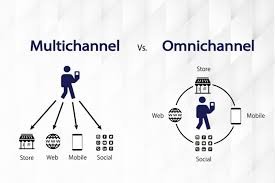
The post-Covid world has witnessed a surge in almost all sectors of e-commerce activity, emerging technologies and improved advertising techniques such as Omni Channel advertising shoulder the blame. The deployment of AI and Machine Learning concepts to B2B and B2C models have resulted in improved conversion rates and enhanced sales figures. Marketing and advertising have come quite a long way, from the humble Out of Home (OOH) format to the next-gen Web3 iteration, the world has witnessed it all. Looking for new customers has its own set of challenges. Taking into account the emergence of new trends and technologies, picking out the right set of people who shall be interested in your product/service can be a bit tricky. The universal set of customers has become more diverse than ever before, diversity seemingly has been increasing exponentially in this digital age. While AI and Machine Learning have driven efficient results, there’s more to their deployment than automation. The surge in AI reliance for acquiring new customers and engaging them has become more noticeable. Close to 56% of leading marketers believe the fact that AI-based data-driven marketing is more accurate and efficient than experience-based practices. Lead generation in the age of big data, with streams of zero, first, and third-party data calls for efficient and out-of-the-box methods. While techniques like Lookalike Modeling look and work great on paper, their deployment often calls for improvement. Lookalike Modeling: The Basics Speaking of Lookalike modeling’s proposed enhancement, one should first understand what it is in the first place. Your zero-party data strategy might be working well for the existing set of customers, but what about the ones you’ve yet to discover? This is where Lookalike Modeling comes into play. Lookalike Modeling assists the advertiser in identifying and targeting those segments that act and behave in the same way as their current customer base. The best part is that the predicted segment hasn’t been reached out to yet. This technique not only allows the advertiser to tap into new segments but also helps them streamline their strategies on the current customer base. Omni Channel advertising techniques can benefit from Lookalike Modeling a lot since the deployment of customer-centric content across multiple channels can also garner a similar response from the segments that are projected to be potential targets. The Omni Channel advertising technique has become a mainstay of a number of industries today. A good marketer with the right know-how can retain 90% of the customers using the Omni Channel Advertising technique alone. This reliance on Omni Channel also necessitates the usage of Lookalike Modeling. The aforementioned points on Lookalike Modeling paint a very good picture for advertisers. However, one shouldn’t rely solely on the current practices alone. Being aware and on par with the upcoming trends can not only benefit your existing marketing strategy but can also help you with the updates you’ll be making to the said plan in the future as well. Here’s what the future of Lookalike Modeling might look like The complexity of algorithms driving complex systems only tends to increase with the passage of time. As of now, a gazillion systems might be running on the same algorithm as yours. So, how would you establish the differentiating factor and gain the edge? Well, in such situations, the data becomes the differentiating factor. This is where your zero- party data strategy can be taken advantage of. Data has always been the buzzword, but the addition of terms like “privacy,” “encryption,” etc. to the mix has turned out to be a strong driving force when it comes to attracting new customers. Lookalike Modeling’s fuel, when enriched with state-of-the-art encryption techniques and improved zero-party data inclusion shall give rise to accurate targeting and acquisition of customers sharing the same interests as the ones from your current campaign. The future of Lookalike Modeling is nigh, and this is what you need to know: The paradigm shift is inevitable For the most part, supervised learning when combined with Lookalike Modeling gives decent results. The problem, however, arises the moment an unlabeled data set is fed to the system. This reduces the chances of exploration of attributes that might not be visible at first glance. The inclusion of unsupervised learning after going through a series of supervised cycles has been shown to yield accurate results. Since unsupervised learning doesn’t work with labeled data sets, the discovery of hidden patterns is carried out by the system itself. This technique gives rise to the discovery and probable targeting of traits that are subtle but important for the most part. Some subtle traits might even turn out to be the new identifiers for the data set that you’re willing to target in the upcoming days. The human clearance won’t lose its viability While the shift from supervised to unsupervised learning is inevitable, the idea of eliminating human clearance cannot be achieved. The reason being that human clearance at the end of the day might put the entire process back on track if it has deviated from the way before. The reliance on unsupervised learning has its benefits, but one cannot be entirely sure of the results shared after the modeling process. Certain aspects if added to the set of potential customer behaviors might end up creating a different persona altogether. And if the modeling process continues to work upon the wrongly evolving set, the results will start to vary, and in some cases, they might even vary drastically. Hence, the need for human intervention has been prophesized. Creation of sub-models with evolving privacy measures Data privacy has not only become mainstream but has also become one of the major factors that has led to the adoption of new and safe data extraction methods. Industries are focusing more towards the self-declared aspect of data than the extraction process. Your zero-party data strategy will do wonders if done the right way, establishing faith is a key component of the extraction process. However, the extraction of said zero-party data has to evolve with the evolution of privacy regulations as well. This brings into account the deployment of sub-models. Think of them as smaller repositories

Articles

Strategies That Matter In The AdTech Industry

The year 2022 has been a period of uncertainties, where the entire world economy has gone through a disastrous pandemic era. The Covid-19 lockdowns and restrictions drastically impacted every business, it gave them a rejuvenating time to regain their energy and commence operations at their full potential. As we are on the verge of entering a new year, economic recessions are the other major threat that we are confronting at this phase of time. This will make it erroneous for the inception of innovative ideas and only those who are incredibly expert and prove the value of their product will survive. This blog will introduce you to the AdTech trends that could produce notable outcomes in the upcoming year. New Strategies of the AdTech Industry Long-term brand building The uncertain scenario always compels marketers to conduct performance marketing rather than building a strong brand. Ideally, marketers should give great prominence to the long-term brand building so that when consumers are ready to purchase, this brand has to be at the top of their minds.  Performance marketing is always imperative but at unpredictable times, marketers must move forward with a strategy that can drive sustainable results. Proficient marketers must coordinate brand-building and performance marketing as one, simultaneously resulting in higher er r er OAS( Return On Advertising Spend). Subsequently, it ensures the brand’s popularity above everything. Value-based decision making  For a brand to sustain itself in an unprecedented time, advertisers have to align their activities with the values of their target audience. This is what we saw when Elon Musk takeover Twitter which resulted in half of Twitter’s top 100 advertisers seemingly halting spending on the platform amid brand safety concerns. In the upcoming years, we are going to witness a drastic change in businesses to operate in an environmentally sustainable way to meet consumer expectations. As far as consumers are concerned, they are least interested in brands talking about sustainability, rather they want to see it embedded into business strategies. High focus on first-party data  Until now advertisers heavily depended on third-party cookies for collecting data. The surge in privacy-driven restrictions has consequently resulted in the compulsion of the entire digital advertising industry to reanalyze its marketing strategies. Due to the recently announced privacy regulations, marketers have to come up with a new solution to target the audience. Contextual audience targeting by Adtech companies is probably going to become quite popular in 2023. Contextual advertising is a kind of targeted advertising that takes keywords and content of the webpage into consideration when displaying ads instead of user behavior. Efficient utilization of video advertising campaigns  Video can grasp the attention of the audience far better than any other medium. Thus, video ad campaigns can produce more lucrative results than any other mode of advertisement. The recent statistics on video advertising ascertains that viewers are likely to retain 95% of the information they receive through video, compared to the 10% absorption rate via text. The impact of video advertising campaigns was much evident from the social media platforms like TikTok, Instagram, and YouTube. As these platforms staggered into popularity among users has motivated brands to utilize these channels for running their ad campaigns.  Brands can make use of video ads to raise awareness and make consumers about their brand. To make it highly successful, they have to research how their audience consumes video to mitigate their efforts. Transparency in brands  The year 2022 has been filled with a growing awareness of online users’ privacy rights, 2023 can be foreseen as marketers’ efforts to adapt to new changes formulated out of privacy issues.  As advertisers highly want to integrate their brand values and beliefs into users’ requirements, they will have to completely redefine their marketing strategies.  There are more chances to shift their focus on the value exchange between marketers and consumers where advertisers have to think about marketing efforts that build trust. High effectiveness of CTV  Data-driven connected TV viewing is expected to proliferate remarkably considering the fact that more than 68% of TV viewing already is from streaming devices. Hence, CTV can be included among the ones that provide subsequent advertising opportunities in the year 2023. AI in digital marketing  Artificial intelligence(AI) has found its role in digital marketing due to the challenges that both publishers and advertisers confront when trying to run effective ad campaigns. When companies leveraged traditional strategies and techniques to analyze data and monitor performance they still struggled to reach the desired customers. Eventually, companies started to embrace AI solutions to achieve targeted results due to big data analytics. Thus, companies started to make better predictions and more result-driven strategies. Traditional panel-based distribution  Marketers are turning to new technologies that maintain track of continuously changing consumer behavior as traditional panel-based measurement fast becomes obsolete. They are moving away from conventional panel-based measurement and shifting their spending from linear TV to CTV as they search for new alternatives. To sum up The change to privacy-first advertising and the widespread deprecation of ad IDs will propel programmatic advertising into an inventive phase in 2023. For the industry to adapt and flourish, the adoption of industry standards, consideration of contextual signals, and development of open data exchange channels will be essential. First-party data sources are essential for efficient brand promotion as always. Additionally, programmatic advertising may succeed as we move into the year 2023 if we take advantage of emerging techniques in the market like CTV, DOOH, digital audio, and gaming.

Articles

Using website personalization to Boost Customer Engagement

Across all online platforms, including personalized website content, social media channels, or even their YouTube or Spotify premium playlist, 81% of consumers today expect brands to learn about them and offer them individualized content. Users yearn for a personalized experience that will speed up, simplify, and, above all, make their decision-making process intuitive. However, some brands might still struggle with personalization. Mention reports that 83% of marketers say their biggest challenge is correctly implementing it. Customer Engagement by making personalized website might not appear as difficult now that AI-powered personalization platforms are available. The blog discusses some recommendations that should help your company create user-tailored content for your website to boost engagement. Strategies to personalize your website You can’t really personalize a visitor’s experience on a website without having the right kind of visitor data to support what you’re planning, so that is where the problem lies when it comes to website personalization. Your ability to create and add more individualized content to your website as well as boost engagement and sales will increase as you learn more about your visitors. Below are some ideas which can help you in personalizing your website. Collecting data of the visitors The secret to boost customer engagement in a customer-centric and highly dynamic marketplace is the ability to grab the attention of your prospects while collecting the right kind of data and successfully using it to smoothen your marketing strategies. Additionally, businesses that can use this information to their advantage outperform their rivals by 85% in terms of sales volume and 25% in terms of gross margin. It’s important to consider the type of visitor data you have to comprehend your prospects as you begin to develop a strategy to implement website personalization. After that, you can determine the most effective methods and ways to provide the experience the visitors expect by utilising the power of predictive analysis and machine learning. Customer Profiling The next step is creating customer profiles after gathering the visitor’s data from all the necessary sources. A customer profile, also referred to as a persona, acts as a thorough manual that explains the strategies you can employ to connect with your ideal target market. It provides you with a detailed understanding of your customers’ objectives and what they are searching for on your website, which can be used to develop more specialized messaging strategies that will appeal to them. Goal Setting Here’s where you start setting goals for your website and for each of your customer personas. Goals can range from boosting conversions to decreasing bounce rates, facilitating the discovery of products or services to encouraging repeat business, and much more. Additionally, your objectives may differ based on various audience segments, organizations and industry, and even geographical locations. Creating a strategy Preparing foolproof strategies to customize your website to increase customer engagement is, practically, where you start your personalization journey. Having a strategy streamlines your processes and systematizes your performances. It enables you to have a clear picture of the roadmap to your goal and doesn’t let you lose your track. As far as customization of the website is concerned, Homepage, Product Page, Search Results, No Search Results page and Shopping Cart Page are the pages that should be on your priority. Implementing the strategy Creating a strategy is not enough; thorough planning and implementation of the strategy are also required to boost engagement of the customers. After all of the preparation work has been completed, it is time to begin creating actual campaigns to carry out your personalization strategy. Write down all of the major goals for the website personalization program before it begins. Make a list of all the pages and elements you want to improve and customize. After you’ve identified campaigns and made all of your other preparations, the next step is to create a system for prioritizing your written campaigns. Compare the expected effects of each campaign to the level of difficulty. Use the appropriate algorithms to optimize your campaigns. It is also critical to test and iterate on website personalization campaigns on a regular basis. Measuring the success It’s crucial to use the appropriate metrics to assess how well your website personalization is working. Not just in terms of charting the effectiveness of the campaigns you drafted and implemented, but also for figuring out your ROI channels and assessing how well they’re serving you. Benefits of Website Personalization The essential component to improving the user experience is personalization. Your users’ possibilities of entering the conversion funnel and becoming devoted customers increase the better you cater to their needs and wants. The following are some advantages of customizing your website: Personalization of your website can improve your customer’s experience. You can get more qualified leads who are more likely to enter your sales funnel. By customizing your website, you can optimize your landing pages. Understanding your website’s visitors, prospects, and customers better and providing them with a personalized experience increases brand affirmation. Conclusion Web personalization is a field of knowledge that enables you to connect with your customers effectively and efficiently, engage with them, enhance your cross-channel marketing strategies, and multiply your ROI. Cubera can assist if you want to customize your website to give your customers a better experience. Your customers’ preferences can be understood and catered to by using Cubera‘s rich identity graphs and zero-party data.

Articles

4 Suggestions To Increase Marketing ROI Over The Holidays

The holiday season brings forth a plethora of opportunities for buyers and sellers alike. It’s a win-win situation for all of us. As per the numbers, this year’s holiday e-commerce activity shows an estimated increment of 15.5%. This brings the total number to a staggering $236 billion when it comes to overall holiday e-commerce activity. In case you’re wondering how to target your custom audiences this year, fret not for we’ve got you covered. As a marketer, you’ll be dabbling into the realm of e-commerce almost on a daily basis. This constant involvement calls for a robust strategy that’ll assist you in increasing your ROI. Marketing in its own right is one of the most powerful and accessible tools to garner people’s attention toward your brand. For example, the cost of digital content marketing is 62% less than the conventional methods. ROI dictates almost all business actions these days. The better the numbers are, the more likely your business is to gain an edge over the competition. So, if boosting your ROI is such a crucial aspect of establishing your brand’s presence, what steps should you take to achieve the best results? Well, this is where the following points come into the picture. Personalization is the key Running a personalized marketing strategy works wonders for your business model. To put it simply, the more personalized your approach is, the more likely the customer is to believe you. Close to 80% of customers are highly likely to buy from a brand that approaches them with a personalized ad, mail, or any other message as per their marketing campaign. Once you’ve established your understanding of your target audience, you can study their buying prowess and map the results with a cohort that shows a similar interest. This establishment of understanding between your brand and the customer is crucial as 70% of customers show loyalty to the brands that understand the customers’ needs. Speaking of the aforementioned mapping process, you can in fact create your lookalike audience from the existing bunch that shows interest in your personalized approach. Absolute personalization can also be achieved if you take into account the data that you’ve been gathering all this time. You can deploy sophisticated AI-powered automation, combine the existing zero-party data with third-party data streams, and a robust audience manager. The more channels you tackle, the better One absolutely effective way of creating custom audiences during this holiday season is to approach them on as many channels as possible. It’s pretty simple, allocate a budget for the total number of channels that you wish to reach people on. There’s a catch though, it’s up to you how you spend your money on each channel. Say, if a strong set of customers are flocking to a couple of channels out of a dozen, then it would be wise to invest more on the two channels than the others. For example, as of 2021, users have been spending an average of 10 hours per month on Instagram. It trails right behind Facebook as the most probable social media platform for marketers on this planet. So, as a marketer looking for the right channels to tackle during the holiday season, you would be more interested in Instagram and Facebook than other social media channels. Emails have been a strong channel for marketers as well. With personalized email copies, marketers have been able to target the right audiences at the right time. Global email users are expected to reach a figure of 4.48 billion by 2024, one more reason for you to choose email as another potential channel from the list of channels. Location-based marketing can work wonders for you A whopping $66.61 billion market size is expected to appear on the horizon by 2028. This figure relates to the location-based services aspect of businesses. While the digital realm attracts almost a gazillion users every day, brick-and-mortar stores are adopting trends to stay in the game as well. You can literally use a certain percentage of your custom audiences who might be in close proximity to a physical store with an enticing offer. In fact, you can target the said chunk via personalized emails and messages, reminding them about the latest offer that the brick-and-mortar store is talking about. Location plays a huge role in determining your customer’s buying behavior as well. The more options a place offers to the customer, the more they’ll be interested in exploring it. You can also gather intelligence based on one location and map the same on a separate one to get a lookalike audience for your campaign. Loyalty matters, probably the most Perhaps one of the most important aspects when it comes to preparing for the holiday season is your ability to retain the customers you come across. Customer loyalty gives rise to customer retention which is just the icing on the cake. Customer loyalty management is literally a thing and it shouldn’t be taken lightly, in fact, the said industry is valued at $4 billion as of 2022. And, it is expected to reach $18 billion by 2028. Establishing loyalty is a game of patience while providing the best services to your long-time customers. Moreover, you can start a set of exclusive perks and rewards for those long-time customers who have been loyal to you. Their loyalty is not only a permanent number on the statistical sheet as they can also help you increase the existing number of customers quite efficiently. References work tremendously in favor of businesses. A reference from a loyal customer is more likely to get a new customer onboard. Plus, the fact that it costs more to acquire a new customer than to retain one, also falls in your favor. Long story short The holiday season involves a ton of planning and the right execution of the said plans at the right time. While increasing the ROI is everyone’s go-to approach, deploying the right strategies is what drives the numbers you’re looking for. If you’re a marketer struggling to keep up with the right tools and data for your campaign, then Cubera is your go-to option. With a state-of-the-art audience manager, algorithms, identity graphs, and much

Scroll to Top